· iWork Technologies Team · AI Agents
AI Velocity Pod Readiness Checklist: What to Check Before a Pod Starts
A practical checklist a CTO can run before bringing a senior pod and its AI coding agents into the codebase, plus the signals that it is time to move from an MVP squad to a Velocity Pod.
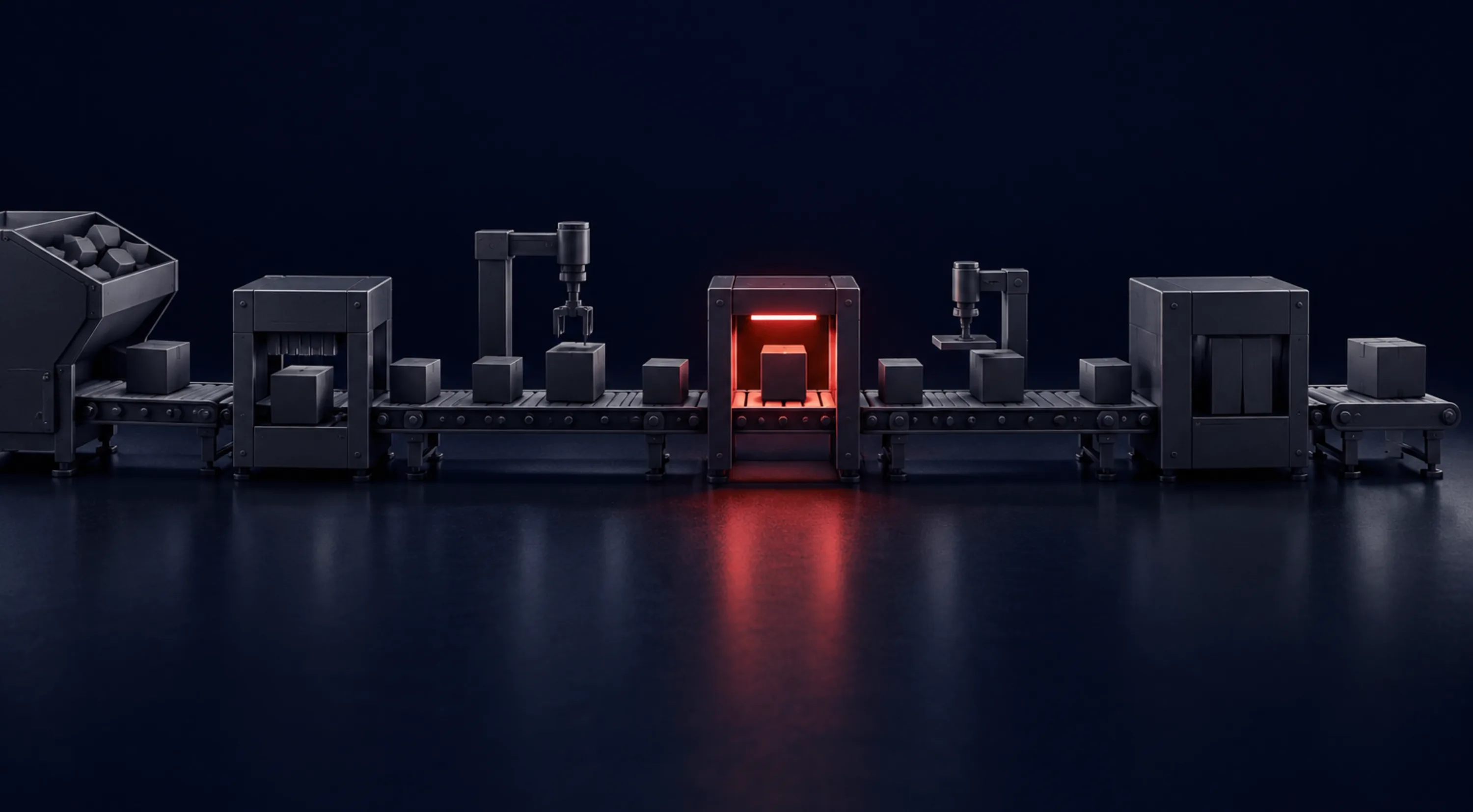
A pod of senior engineers directing AI coding agents can ship from week 2. Whether it does depends less on the pod than on what it walks into.
Agents work best in a codebase with clear boundaries, a pipeline that catches mistakes and a backlog that can be split into reviewable pieces. Where those are missing, the first weeks go on fixing them instead of shipping.
This checklist covers what an AI Velocity Pod depends on in its first weeks. You can run it yourself in an afternoon. None of it needs to be perfect. It needs to be known.
1. The codebase
Agents read your repository the way a new senior hire would, only faster. The questions are the same.
- Can a new engineer run it locally from the README? If setup lives in someone’s head, write it down first. Agents need the same instructions.
- Are module boundaries clear? You should be able to say which directories own which part of the product.
- Are conventions written down? Naming, error handling, folder structure and preferred libraries. A short conventions file in the repo saves many review comments.
- Do you know where the fragile parts are? List the areas nobody wants to touch. They need tests or a senior owner before agents go near them.
- Is the main branch healthy? If main is often broken, every agent change starts from an unknown state.
2. CI/CD
The pipeline is the first reviewer of every agent change. It has to be trustworthy.
- Does CI run on every pull request? Build, lint, type checks and tests, without manual steps.
- Is it reasonably fast? A slow pipeline becomes a queue of its own when change volume goes up.
- Are flaky tests quarantined? A test that fails at random teaches everyone, people and agents, to ignore failures.
- Is deployment repeatable? Changes should reach staging and production through the pipeline, not by hand.
- Can you roll back? Know how long it takes and who can do it.
3. Test coverage
Tests are how a reviewer knows an agent’s change did what it claimed and nothing else.
- Do the critical paths have tests? Signup, payments, core workflows, anything that would cost you customers if it broke.
- Are tests checking behavior, not implementation? Tests that break on every refactor slow agents down without protecting anything.
- Is there a rule against weakening tests? Deleting or loosening an assertion to make CI pass should always need a senior’s explicit approval.
Low coverage is not a blocker. It does mean the first work a pod does in that area is writing tests, before features.
4. Access scoping
Agents should reach only what a task needs. Set this up before any code is shared.
- NDA and IP assignment signed. Before access is granted, not after.
- Repositories listed. Exactly which repos the pod and its agents can see and change.
- Least-privilege accounts. Separate accounts or tokens for the pod, in your systems, which you can see and revoke.
- Secrets out of the repo. Keys and credentials in a secrets manager;
.envand key files excluded from what agents read. - Approved AI tools named. Which coding tools can touch your code, on business accounts that do not train on it. Our security page covers how we handle this.
- An offboarding step. Access is removed when the engagement ends.
5. Backlog shape
Agents turn well-shaped tickets into reviewable PRs. They turn vague tickets into large, hard-to-review changes.
- Is there at least a few weeks of prioritized work? Enough that week 2 does not stall waiting for decisions.
- Do tickets have acceptance criteria? What done looks like, in terms a test could check.
- Can the big items be split? Large features should break into pieces that ship independently.
- Is there a product owner who answers quickly? Calendar time depends on decision speed more than on coding speed.
6. A named review owner
This is the item most teams skip, and the one that decides whether a pod adds capacity or adds load.
- Who on your side approves pod PRs? One named person per repo or service, with time set aside for it.
- What does your process require? Some teams want final approval on every change; others are happy for the pod’s seniors to merge within agreed areas. Decide up front.
- What is the review target? Agree how quickly a finished PR should get a first look.
In our pods, senior engineers review agent output before it reaches your team. Your reviewer sees finished, tested pull requests, not raw drafts. They still need the time to look at them.
7. Security and IP
- Your repos, your cloud accounts. Work should happen in your environments, under your access controls.
- Security review path known. If your procurement needs a SOC 2 Type II report, ISO 27001 documentation or a vendor questionnaire, start that in week 1.
- Traceability. Every change should trace from commit through review to production, so audits are a query, not a project.
- Data rules agreed. Which data, if any, agents can see in test or staging environments.
When to move from an MVP squad to a Velocity Pod
Many teams start with an AI Agentic MVP squad: a smaller senior team, Startup Squad from $5K/mo, built to get a production product in front of users. The question is when that stops being enough.
The signals we look for:
- The product has real users. Production support, bug reports and uptime now compete with new features.
- The roadmap has outgrown two engineers. There are more parallel workstreams than a small squad can review properly.
- Features cut across services. Changes touch several parts of the system at once and need someone owning the architecture.
- Review, not ideas, is the bottleneck. Work is ready but waiting for approval.
- You need AI features without pulling seniors off the core. Agents, RAG or copilots in the product, built alongside the main roadmap.
A Velocity Pod keeps the same review standard as the MVP track with twice the senior capacity: four senior engineers and a tech lead on the Growth Core team, from $10K/mo, with extra seniors at $2.5K/mo each as the roadmap grows.
What happens if you are not ready
Most teams fail at least a few items on this list. That is normal.
Week 1 of a pod already covers access, the codebase and the backlog. Gaps found there, such as missing tests on a fragile module or a CI step that only runs locally, become the first tickets. The difference between a smooth start and a slow one is usually whether those gaps were known on day one or discovered in week three.
Where to start
Run the checklist, note where you are unsure, and bring that list to a conversation.
Our Free AI Readiness Audit is a 30-minute call on your roadmap, codebase and delivery bottleneck, ending with a recommended pod shape. Read more about how pods work on the AI Velocity Pods page, or about the starting point on AI Agentic MVPs.